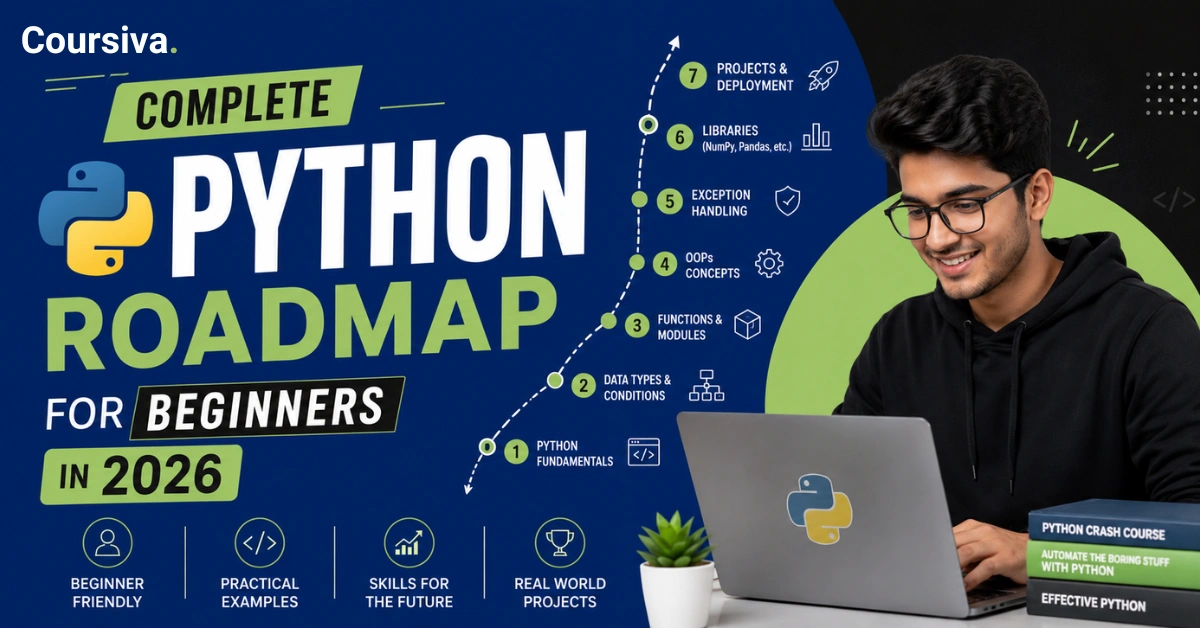
Python has become one of the most popular programming languages in the world. From Artificial Intelligence and Data Science to Web Development and Automation, Python is used in almost every technology industry. This is why many students are searching for the complete Python roadmap for beginners.
The best part about Python is that it is:
- Beginner-friendly
- Easy to learn
- Highly powerful
- Widely used in companies
- Great for career growth
Students who learn Python can build careers in:
- Software Development
- Artificial Intelligence
- Data Science
- Cyber Security
- Automation
- Web Development
Python is one of the best skills students can learn in 2026.
Problems Most Beginners Face While Learning Python
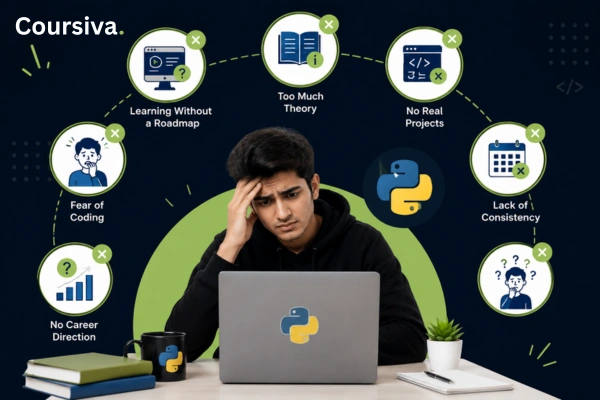
Many students start learning Python but quit after a few weeks because they feel confused or overwhelmed.
Learning Without a Roadmap
Students often watch random tutorials without a structured plan.
Too Much Theory
Many learners focus only on syntax and not on practical implementation.
Fear of Coding
Beginners think programming is difficult or only for advanced students.
No Real Projects
Without projects, students struggle to build confidence.
Lack of Consistency
Students start learning but stop practicing regularly.
No Career Direction
Many students do not know which career path to choose after learning Python.
Why This Happens
Most colleges teach programming only for exams.
But companies expect students to:
- Build projects
- Solve problems
- Understand logic
- Use development tools
- Work on real applications
This creates a gap between theoretical learning and practical industry skills. A proper Python roadmap helps students learn step-by-step without confusion.
Why Python is the Best Programming Language for Beginners
Python is simple compared to many other programming languages.
Easy Syntax
Python uses readable and beginner-friendly syntax.
Example:
y=x+2y=x+2y=x+2
Even simple logic and structure are easier to understand in Python.
Huge Career Opportunities
Python is used in:
- AI & Machine Learning
- Data Science
- Web Development
- Automation
- Cyber Security
Strong Industry Demand
Companies actively hire Python developers because Python supports modern technologies and automation.
Complete Python Roadmap For Beginners
Follow this roadmap step-by-step to become job-ready.
Step 1 – Learn Python Basics
Topics Beginners Should Learn First
Start with:
- Variables
- Data types
- Input and output
- Operators
- Conditional statements
- Loops
- Functions
Practice Daily
Coding daily improves logical thinking and confidence.
Tools Beginners Need
- Visual Studio Code
- Python
- Jupyter Notebook
Step 2 – Understand Data Structures
Important Python Data Structures
Learn:
- Lists
- Tuples
- Dictionaries
- Sets
These are important for solving programming problems and handling data efficiently.
Why Data Structures Matter
Data structures improve:
- Problem-solving
- Coding efficiency
- Project development
Step 3 – Learn Object-Oriented Programming (OOP)
What is OOP?
Object-Oriented Programming helps developers organize and structure code better.
Topics to Learn
- Classes
- Objects
- Inheritance
- Polymorphism
- Encapsulation
Why OOP is Important
Most real-world applications use OOP concepts.
Step 4 – Work on Mini Python Projects
Projects help students apply concepts practically.
Beginner Project Ideas
- Calculator app
- To-do list app
- Number guessing game
- Expense tracker
- Weather app
Benefits of Projects
Projects help students:
- Build confidence
- Create portfolios
- Improve coding skills
Step 5 – Learn Git and GitHub
Why GitHub is Important
GitHub helps developers store and showcase projects online.
Skills to Learn
- Repository creation
- Code uploading
- Version control
- Collaboration basics
Why Recruiters Check GitHub
A strong GitHub profile shows practical coding experience.
Step 6 – Choose a Python Career Path
After learning basics, students should choose a specialization.
Technologies to Learn
- HTML
- CSS
- JavaScript
- Django
- Flask
Career Opportunities
Students can become:
- Backend developers
- Full-stack developers
- Web application developers
Python for Data Science
kills to Learn
- Data analysis
- Data visualization
- Statistics
- Machine Learning basics
Tools Used
- Pandas
- NumPy
- Matplotlib
Python for Artificial Intelligence
Why AI is Growing
AI is transforming industries worldwide.
AI Skills to Learn
- Machine Learning
- Deep Learning
- Neural Networks
- AI automation
Industry Tools
- TensorFlow
- Scikit-learn
Python for Automation
What is Automation?
Automation helps companies save time by reducing manual work.
Automation Examples
Students can automate:
- Emails
- File management
- Data entry
- Reports
Step 7 – Practice Problem Solving
Why Problem Solving Matters
Companies test logical thinking during interviews.
Topics to Practice
- Arrays
- Strings
- Searching
- Sorting
- Logical problems
Consistent problem-solving improves coding confidence.
Step 8 – Build a Strong Portfolio
What Should a Portfolio Include?
Students should include:
- Python projects
- GitHub links
- Certifications
- Internship experience
Why Portfolios Matter
Portfolios help students stand out during placements and internships.
Industry Trends in 2026
Python demand is increasing because companies are investing heavily in:
- AI
- Automation
- Data Science
- Cloud Computing
- Software Development
Companies now prefer candidates with:
- Practical skills
- Real projects
- GitHub portfolios
- Internship experience
Students who continuously practice Python stay ahead in the job market.
Best Tools Every Python Beginner Should Learn
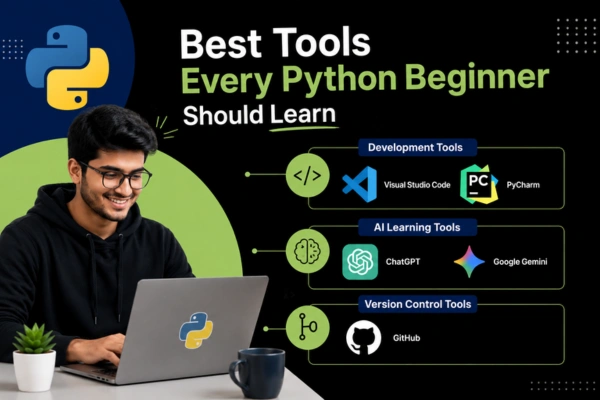
Development Tools
- Visual Studio Code
- PyCharm
AI Learning Tools
Version Control Tools
- GitHub
How Coursiva Helps Students Learn Python
Platforms like Coursiva help students learn Python through practical and industry-focused training.
Students can access:
- Live coding sessions
- Real-world projects
- Internship opportunities
- Placement support
- Career mentorship
- Industry certifications
Coursiva focuses on practical learning instead of only theoretical concepts.
Related Courses Students Can Explore
Python Programming Course
Learn:
- Python basics
- Projects
- Automation
- Backend development
AI & Data Science Course
Learn:
- Machine Learning
- Data analytics
- AI tools
Web Development Course
Learn:
- Frontend development
- Backend frameworks
- Full-stack development
Digital Marketing Course
Learn:
- SEO
- Content marketing
- AI marketing tools
FAQs
Is Python good for beginners?
Yes. Python is one of the easiest programming languages for beginners because of its simple syntax.
How long does it take to learn Python?
Students can learn Python basics within a few months with consistent practice.
Which career is best after learning Python?
Students can build careers in AI, Data Science, Web Development, Automation, and Software Development.
Do I need math to learn Python?
Basic math is enough for most beginner-level Python learning.
Is Python still in demand in 2026?
Yes. Python is highly demanded in AI, automation, software development, and data science industries.
Conclusion
Python is one of the best programming languages for beginners in 2026.
Students who follow a structured roadmap can:
- Learn coding faster
- Build practical projects
- Develop strong portfolios
- Access internships
- Build successful tech careers
The key to success is:
- Consistent practice
- Real projects
- Practical learning
- Industry tool knowledge
Start small, practice daily, and keep building projects. Start learning Python with practical projects and industry-focused training today.
Explore live projects, internships, certifications, and career-focused programs at Coursiva Official Website.
Build your future with practical coding skills and real-world experience.